March 19 |Risography 101 (4 Hours)

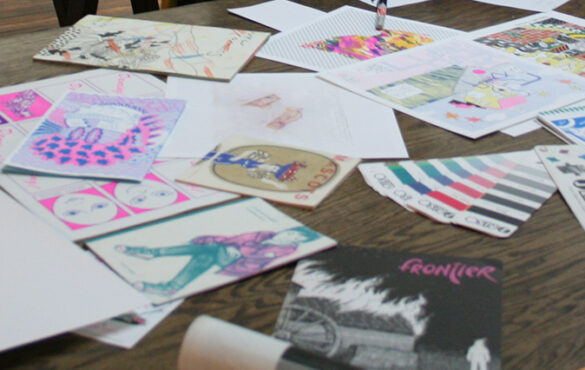
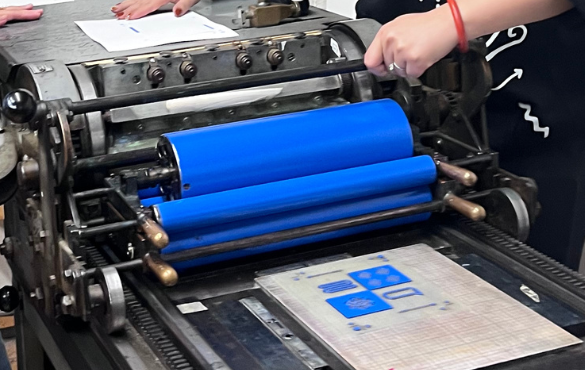
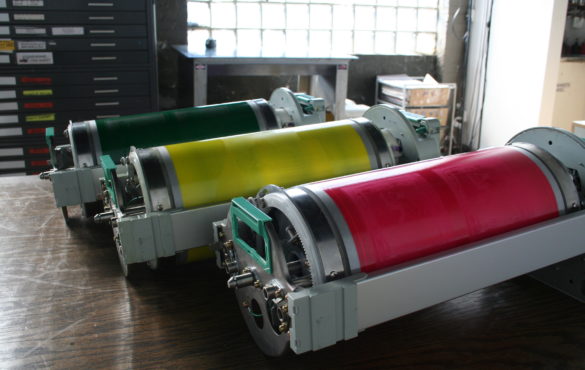
The Risograph is an automated duplicator from Japan that efficiently produces offset-like prints in a variety of saturated colors. Though not originally intended for artistic application, the machine has gained traction (and notoriety) in small-press culture for its distinctive effects and efficiency—as well as for being rather finicky.

This 4-hour workshop will walk students through the fundamentals of risography for bookmaking and fine art printing. Students will learn techniques and best practices for reproducing imagery, giving consideration to ink density, drying time, paper choices, registration, and patience. Students will become acquainted with the mechanics of the printer and learn basic maintenance, including how to change the master roll and a drum’s ink tube. Everyone will leave with an individually designed two-layer print.

Students will receive risography authorization and an Open Studio coupon, redeemable within the following 60 days. The Open Studio coupon is worth 4 hours of studio time (valued at $40) to work independently and continue what you have learned from the class.
March 23 | Screenprinting Refresher & Authorization (4 Hours)

Note: Experience is required to take this refresher class.


This refresher & authorization workshop welcomes students with previous screenprinting experience who are feeling out-of-practice or fuzzy regarding the finer points of the process, or who have never printed at Spudnik before, and want familiarity with our facilities and offerings. Students should have already completed a one-day workshop or full class, although it need not have been at Spudnik. We also welcome printers that would like support working through a particularly complex project or reoccurring printing issue.

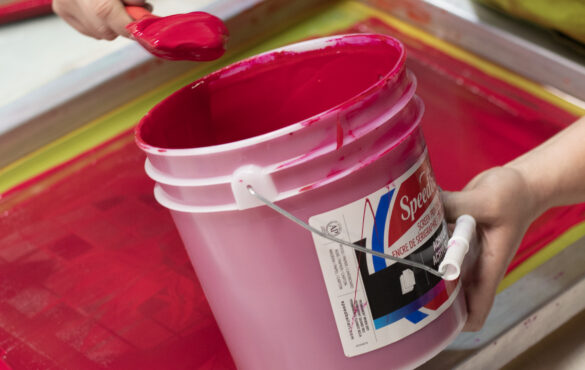
The class will review an assortment of skills such as selecting the best mesh count, applying the perfect coat of photo emulsion, troubleshooting and diagnosing exposure and printing issues, ink mixing, registration, and screen reclamation. Equally as importantly, we will address how to consider these technical factors and limitations when designing a project for printing.

During the workshops, each student will expose a screen, and work with peers to print a two-color image designed to hone nuanced printing skills. Students are welcome to bring specific questions about their next project.

To help build printing confidence at Open Studio sessions, students are invited to return within the week to put their freshly acquired knowledge to use. Through this workshop, students will not only brush up on old skills and become authorized to print at Spudnik, but are sure to walk away with new morsels of useful information regarding the art of screenprinting.

March 27 | Sewn Book Forms (4 Weeks)

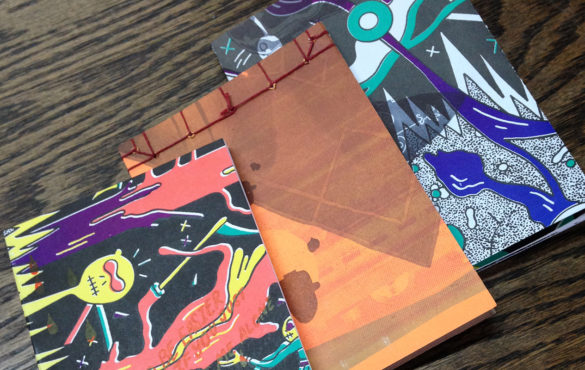
In 4 weekly sessions, students will focus on learning non-adhesive binding structures. Some of these binding styles will include complex sewing structures like coptic stitch, long stitch, and Japanese stab binding.

Students will learn the traditional version of these sewn bindings as well as new variations on the bindings to make more decorative and complicated designs. Participants will work with leather, paper, book cloth, and book board to survey the wide range of techniques in sewn bindings.

At the end of this workshop all students will have the ability to identify and create the most fundamental structures of sewn bindings, recognize the tools, history, and vocabulary around these bindings.

Students will complete four sample books: Two pamphlet stitch varieties, a perfect bound book, and a more elaborate Japanese stab binding.

In addition to learning hand skills, the class will discuss the history of chapbooks, their role in publishing over time, and ways to share and sell chapbooks. If you have writing or images you would like to promote, this is a great workshop to jump start your self-publishing!

March 27 | Studio Access Training: Letterpress (2 hours)

Studio Authorization is always required prior to attending your first Open Studio or becoming a Keyholder. Experience is required for all Studio Access Trainings.

Please take some time to read and ensure that you meet the minimum requirements stated below.

What Are Studio Access Trainings?

Studio Access Trainings ensure that those with prior experience from school or another print studio will be proficient and confident using the equipment in our studio.

What you can expect:

These sessions are NOT lessons, but specifically for makers who already have thorough experience with similar equipment. 

Minimum Requirements to Become Authorized:

  • Have recent experience with the equipment you would like to use (within 2 years)
  • Have thorough experience with the equipment you would like to use (8-week class or equivalent; Experience required varies based on process and equipment).
  • Be comfortable working independently.
  • Demonstrate safe and clean printmaking or art-making habits.
  • Demonstrate respect to our staff and our equipment.


If you do not meet these requirements, please enroll in a class that includes authorization or schedule a series of private lessons

Studio Access Training: Letterpress

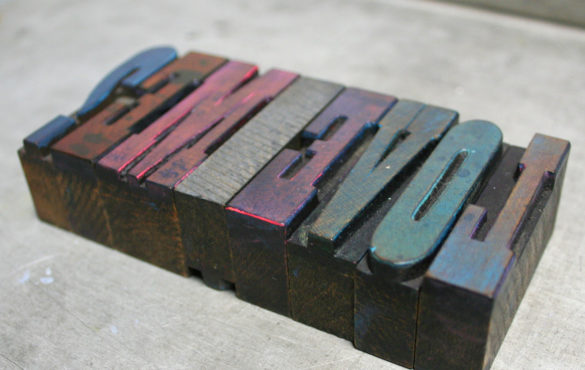
This 2-hour authorization will allow participants to be authorized to print on our platen presses (Pilot and Pearl) and Vandercook Press. Printers may need to book a second on-site session to be authorized for both types of presses.

Every letterpress authorization will ensure that printers are familiar with setting up the press, mixing inks, inking the press, adjusting pressure and registration, printing, and thorough cleaning of the press and all tools. There may not be time to practice printing both a polymer plate and movable type, but both methods can be reviewed as needed.

As with all our Studio Access Trainings, we will also cover equipment available to check out and press reservation policies.

March 29| Experiments in Etching

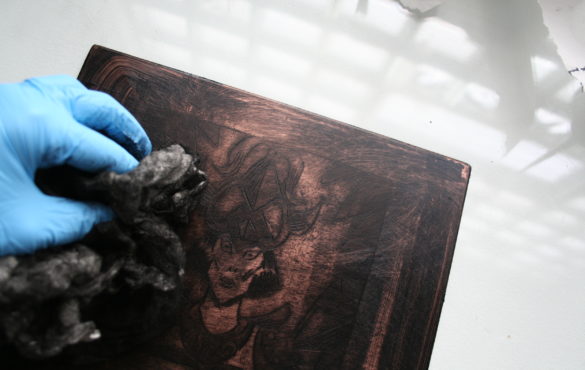
Intaglio printing is one of the oldest printing techniques in the world, dating back to the 15th century. Using the basic concepts of employing resists and acids to create surfaces that are inked and printed to create consistent images, artists for hundreds of years have used these principles to create dramatic light and dark tones, fine detail, and gestural mark making within their printed images. 

Students of all skill levels will learn through this class the basic mechanics of intaglio printing and will incorporate the use of resists, acids, and inks to etch lines and tones into copper and ultimately produce printed images. Utilizing these traditional concepts as a jumping off point, this class will explore experimental techniques and unconventional materials such as plaster printing, unconventional aquatint, sugar lift, and more. Each week will introduce a new concept, demonstration, and hands-on learning, culminating with a final project at the end of 4 weeks. Students will be encouraged to work independently between classes. 

Students completing this class will become authorized to print at Spudnik Press through our Open Studio program.

March 31| Drypoint Printing (4 Hours)

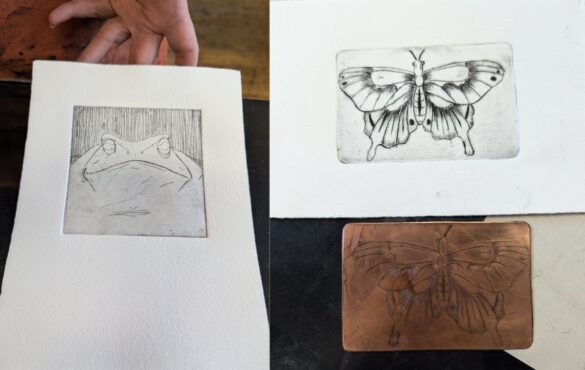
This workshop is great for ambitious beginners curious about intaglio techniques. The drypoint process covers the basic skills needed to become familiar with etching and other intaglio processes, and therefore would set students up for further success with intaglio in the future.

Students will learn drypoint techniques, plate wiping techniques, and gain familiarity with intaglio printing. Students will leave with a finished drypoint plate and print, as the class hours will be devoted to learning technique versus creating a perfected artwork.

April 4| Experimental Zinemaking (4 Weeks)

The shapes and forms of books can be as wildly varied as their contents. A few simple concepts like folding, sewing, and gluing can be combined and stretched and iterated upon to make something wholly new but still recognizably “a book.”

Over 4 weeks, students will not only learn how to bind classic and experimental bookforms, but also how to use the Risograph to print the content of their books quickly and stylishly.

No experience is needed in either Risography or bookbinding, simply a creative spirit and a readiness to experiment.

In addition to gaining authorization to print independently at Spudnik Press, students will have access to Open Studios to work on their projects.

April 5 | Screenprinting on Fabric (4 Weeks)

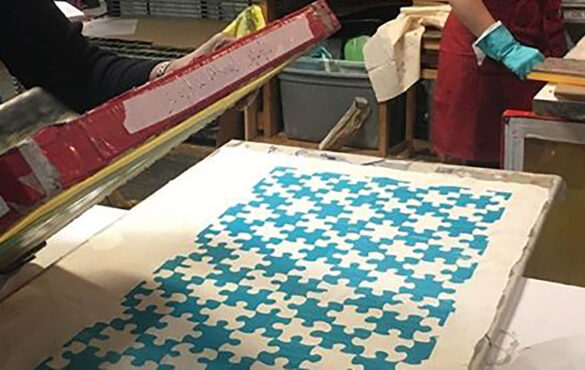
This course introduces the full process of printing on fabric and garments, from coating and exposing screens to printing, reclaiming, and editioning. Students will print on flat fabric and apparel using both print tables and a T-shirt press, learning how images behave on different materials.

The class emphasizes hands-on practice, repeat printing, and registration, with time set aside for experimentation. Students will leave with a finished garment or small edition and the confidence to work independently in the screenprinting studio. Throughout the class, students are encouraged to bring their own fabric and garments to print on as well.

April 6 | Riso Animation (4 Weeks)

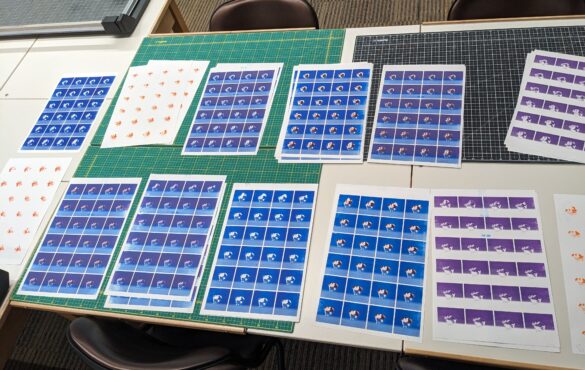
Discover the unique world of Risograph printing and animation in this hands-on four-week course. Beginning with the fundamentals of the Risograph machine, you will progress through a complete animation workflow — learning not just how to print, but how to bring your prints to life.

Using Spectrolite, an intuitive software designed for Riso printing, you will create standalone prints, explore layering techniques, and develop a foundation for animation. From there, you will learn how to scan and composite your work in Photoshop, building toward a finished animated GIF and a short Riso animation to take home.

You will leave the course with prints, contact sheets, and a collection of digital material to continue experimenting with long after the final session. With the Risograph, practice and experimentation are at the heart of every unique result.


What to Bring

— USB drive

— Notebook


*note: this class only has 4 spots in it, so registration may be competitive

April 6 | Intro to Screenprinting (4 Weeks)

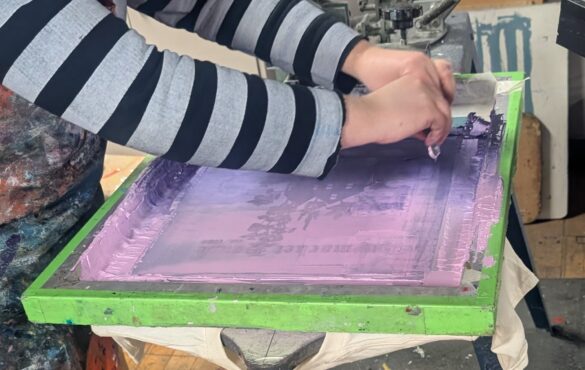
Screenprinting is an art form known for its bold graphics and versatility. It is an approachable art form, yet has many facets to explore and master. This foundational screenprinting class introduces all the basic skills to get someone new to the process up and running, creating art on both paper and fabric. 

A selection of projects will offer students the opportunity to produce prints from drawings, digital designs, and found or photographic imagery. Students will become familiar with the full process from selecting the right screen for the job, to dark room exposure, to mixing inks, to printing, to reclaiming the screens. With support from an experienced printer, students will practice printing and (equally important) troubleshooting.

By the end of this class, students will know their way around the print shop and be authorized to continue printing independently at Spudnik Press  through our Open Studio program.


Apiril 9 | Risography Explorations (4 Weeks)

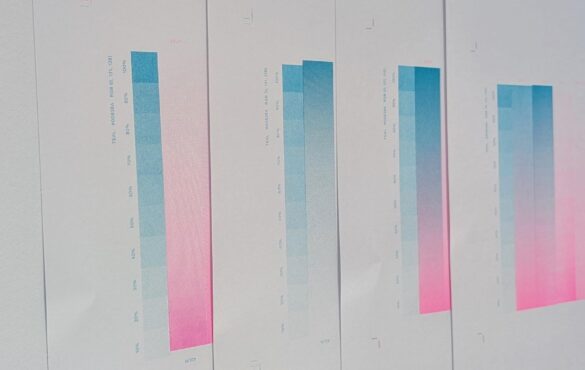
The Risograph is an automated duplicator that efficiently produces multi-color prints with a distinct look and feel. Combining some of the best elements of photocopiers, screenprinting, and offset, risography can be an exciting medium for comic artists, writers, illustrators, designers, book artists, and more.

Our Risography Explorations class teaches students to work with our machine. Beginning with a multi-color print, students will be introduced to risography techniques and mechanics. From there, they will create their own zine, mini-comic, or broadside to continue exploring the possibilities of the process. Students will also learn a variety of simple book forms that they can use for their independent project.

Throughout the four weeks, students will learn best practices for designing and creating risograph prints, taking into consideration ink density, drying time, paper selection, and registration. Risograph machines are known for being rather finicky—students will also practice basic maintenance and troubleshooting, including how to change ink, reset and replace the master roll, and fix paper feed issues.

In addition to gaining authorization to print independently at Spudnik Press, students will have access to Open Studios to work on their projects.

April 10 | Studio Access Training: Letterpress (Vandercook)

Studio Authorization is always required prior to attending your first Open Studio or becoming a Keyholder. Experience is required for all Studio Access Trainings.

Please take some time to read and ensure that you meet the minimum requirements stated below.

What Are Studio Access Trainings?


Studio Access Trainings ensure that those with prior experience from school or another print studio will be proficient and confident using the equipment in our studio.


What you can expect:

These sessions are NOT lessons, but specifically for makers who already have thorough experience with similar equipment. 


Minimum Requirements to Become Authorized:

  • Have recent experience with the equipment you would like to use (within 2 years)
  • Have thorough experience with the equipment you would like to use (8-week class or equivalent; Experience required varies based on process and equipment).
  • Be comfortable working independently.
  • Demonstrate safe and clean printmaking or art-making habits.
  • Demonstrate respect to our staff and our equipment.


If you do not meet these requirements, please enroll in a class that includes authorization or schedule a series of private lessons


Studio Access Training: Letterpress


This 2-hour authorization will allow participants to be authorized to print on our platen presses (Pilot and Pearl) and Vandercook Press. Printers may need to book a second on-site session to be authorized for both types of presses.


Every letterpress authorization will ensure that printers are familiar with setting up the press, mixing inks, inking the press, adjusting pressure and registration, printing, and thorough cleaning of the press and all tools. There may not be time to practice printing both a polymer plate and movable type, but both methods can be reviewed as needed.

As with all our Studio Access Trainings, we will also cover equipment available to check out and press reservation policies.