Posts Categorized: Time

April 18 | Family Screenprinting: Screenpainting (2 Hours)

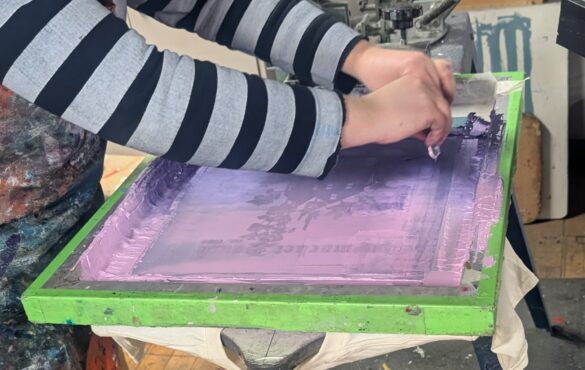
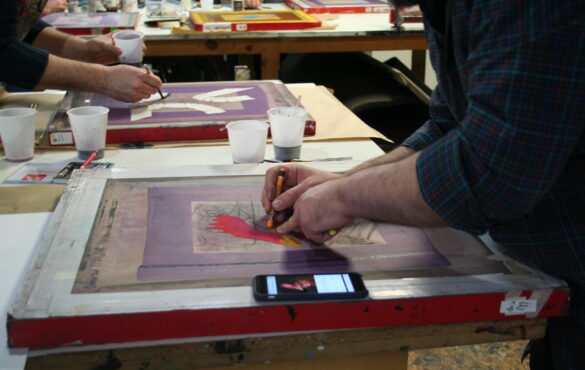
Explore screenprinting with your family through one of its most improvisational and expressive techniques: screenpainting. Using dry pigments or watercolor paints applied directly to the screen, participants will collaborate to create bold, unexpected marks and textures not typically associated with traditional screenprinting.

All materials and instruction are provided, making it easy to jump in and experiment. Families will produce a series of monoprints and ghost prints that can stand alone or serve as a base for further refinement. No computers required—just hands-on making and creative play.

Each registration includes up to four participants of all ages. You’re welcome to attend with the people you consider family. So bring the people closest to you and enjoy creating together.
April 20 | Drypoint Printing (4 Hours)

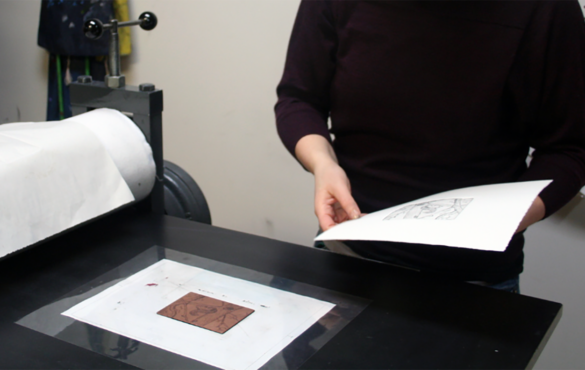
This workshop is great for ambitious beginners curious about intaglio techniques. The drypoint process covers the basic skills needed to become familiar with etching and other intaglio processes, and therefore would set students up for further success with intaglio in the future.

Students will learn drypoint techniques, plate wiping techniques, and gain familiarity with intaglio printing. Students will leave with a finished drypoint plate and print, as the class hours will be devoted to learning technique versus creating a perfected artwork.

April 21 | Linocut Block Printing (4 Hours)

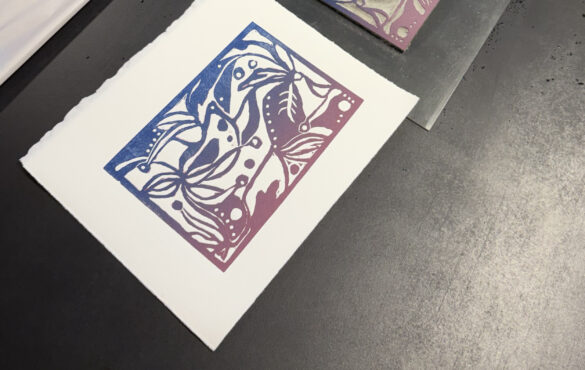
Relief printmaking dates as far back as the 7th century and is considered the oldest form of printmaking. An image is carved into a block of wood or linoleum, which is then inked and pressed to transfer the image. The tools are simple and approachable, but the possibilities are expansive.

In this 4-hour workshop, students will plan, carve, and print a linoleum block. The class guides students through the process of transferring an image onto their block and techniques for creating line, shape, contrast, and texture. By the end of class, students will print their images by hand, taking home a small edition.

April 23 | Screenprinting Refresher & Authorization (4 Hours)

Note: Experience is required to take this refresher class.

This refresher & authorization workshop welcomes students with previous screenprinting experience who are feeling out-of-practice or fuzzy regarding the finer points of the process, or who have never printed at Spudnik before, and want familiarity with our facilities and offerings. Students should have already completed a one-day workshop or full class, although it need not have been at Spudnik. We also welcome printers that would like support working through a particularly complex project or reoccurring printing issue.

The class will review an assortment of skills such as selecting the best mesh count, applying the perfect coat of photo emulsion, troubleshooting and diagnosing exposure and printing issues, ink mixing, registration, and screen reclamation. Equally as importantly, we will address how to consider these technical factors and limitations when designing a project for printing.

During the workshops, each student will expose a screen, and work with peers to print a two-color image designed to hone nuanced printing skills. Students are welcome to bring specific questions about their next project.

To help build printing confidence at Open Studio sessions, students are invited to return within the week to put their freshly acquired knowledge to use. Through this workshop, students will not only brush up on old skills and become authorized to print at Spudnik, but are sure to walk away with new morsels of useful information regarding the art of screenprinting.

April 26 | Bookbinding 101 (4 Hours)

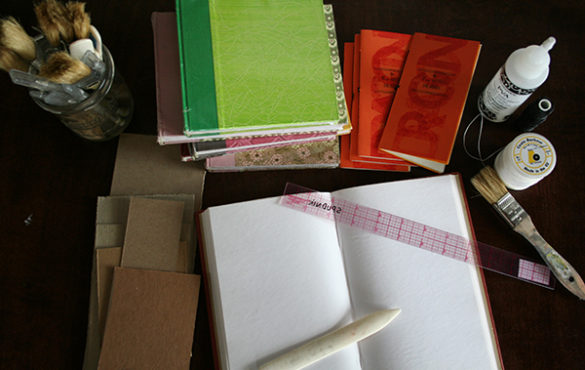
This workshop focuses on styles of bookbinding that are low-cost yet dynamic, and well suited for poetry chapbooks and portfolio books. Students will learn how to choose materials and create simple book structures that best highlight the content within their book.

The lessons will address the logistics of organizing book forms and explore the book as a vessel for information, and how material choices can inform how the book is read. While the workshop will create blank books, each style of binding will begin with standard 8.5” x 11” paper to allow your content to be easily printed from a common inkjet or laser printer.