April 21 | Linocut Block Printing (4 Hours)

Relief printmaking dates as far back as the 7th century and is considered the oldest form of printmaking. An image is carved into a block of wood or linoleum, which is then inked and pressed to transfer the image. The tools are simple and approachable, but the possibilities are expansive.

In this 4-hour workshop, students will plan, carve, and print a linoleum block. The class guides students through the process of transferring an image onto their block and techniques for creating line, shape, contrast, and texture. By the end of class, students will print their images by hand, taking home a small edition.

April 23 | Screenprinting Refresher & Authorization (4 Hours)

Note: Experience is required to take this refresher class.

This refresher & authorization workshop welcomes students with previous screenprinting experience who are feeling out-of-practice or fuzzy regarding the finer points of the process, or who have never printed at Spudnik before, and want familiarity with our facilities and offerings. Students should have already completed a one-day workshop or full class, although it need not have been at Spudnik. We also welcome printers that would like support working through a particularly complex project or reoccurring printing issue.

The class will review an assortment of skills such as selecting the best mesh count, applying the perfect coat of photo emulsion, troubleshooting and diagnosing exposure and printing issues, ink mixing, registration, and screen reclamation. Equally as importantly, we will address how to consider these technical factors and limitations when designing a project for printing.

During the workshops, each student will expose a screen, and work with peers to print a two-color image designed to hone nuanced printing skills. Students are welcome to bring specific questions about their next project.

To help build printing confidence at Open Studio sessions, students are invited to return within the week to put their freshly acquired knowledge to use. Through this workshop, students will not only brush up on old skills and become authorized to print at Spudnik, but are sure to walk away with new morsels of useful information regarding the art of screenprinting.

April 26 | Bookbinding 101 (4 Hours)

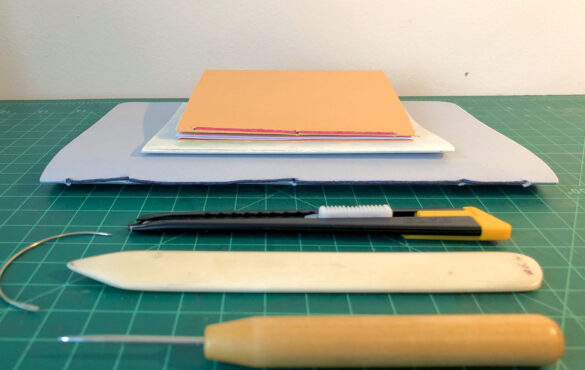
This workshop focuses on styles of bookbinding that are low-cost yet dynamic, and well suited for poetry chapbooks and portfolio books. Students will learn how to choose materials and create simple book structures that best highlight the content within their book.

The lessons will address the logistics of organizing book forms and explore the book as a vessel for information, and how material choices can inform how the book is read. While the workshop will create blank books, each style of binding will begin with standard 8.5” x 11” paper to allow your content to be easily printed from a common inkjet or laser printer.

April 30 | Collagraph Printing 101 (1 Day)

This 4-hour workshop introduces students to the process of creating a mixed-media matrix that is printed in relief. Understanding how collaged materials visually transform when printed in relief will show students the transformative property of printmaking.
Students will gain familiarity with collagraph printing, plate wiping techniques, and relief printing. By the end of class, all students will have a finished collagraph plate and have at least one print of the plate in black ink on white paper.

This class would benefit students who are looking for an experimental and abstract way to understand the fundamentals of printmaking.

May 9 | Building a shapeshifting artist book with bex ya yolk

This one-day workshop invites participants to learn fundamental bookbinding practices to construct an experimental book form that can be displayed and experienced in multiple ways. We will explore how books can expand, transform, unfold, and occupy space—functioning as both narrative structures and sculptural objects.

Participants will be guided through the development, material exploration, and hands-on construction techniques to create a flexible book form that shifts between states (e.g., flat, dimensional, geometric, or sequential) 

No prior bookbinding experience is required but encouraged.

bex ya yolk (they/them) is a visual artist, designer, bookmaker, and educator, based in Chicago, IL. yolk received a BFA in Graphic Design from Virginia Commonwealth University School of the Arts and an MFA from the School of the Art Institute of Chicago with a concentration in Book Arts as a full merit scholar. yolk is the founder of THUNGRY–– a publishing initiative and artists’ book bindery complicating traditional ways of Book building and semantics through experimentation + queering praxis. yolk utilizes the confines of the Artists’ Book, fundamental principles in design, and exploratory methodologies in sculpture to disrupt what we’ve come to understand qualifies a Book. With a research practice rooted in reproductive rights, histories, and design–– yolk focuses on the philosophy of ‘the maternal’, as a theology and a logic to live by. As socio-political landscapes evolve in regards to what is acceptable, legal, and safe for AFAB and queer people, yolk boldly addresses what could come of our collective futurity through subgenres such as: care work, reproductive justice, health care disparities in the U.S, and container technologies making visible the the intersectionalities between the Book and the bodies this research pertains.

May 10 | Design for Print: Thinking Through Color — Understanding Single Color Production with the Risograph

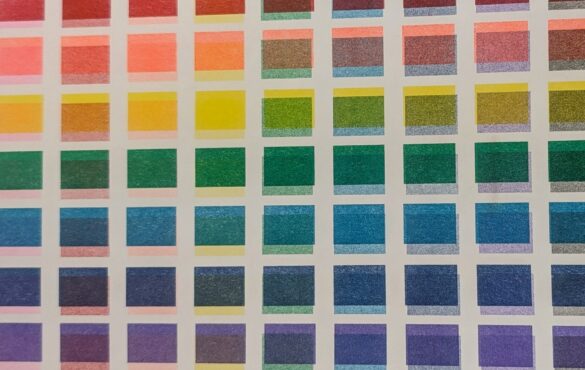
Print is, at its core, a subtractive and sequential medium — color is built layer by layer.  For designers who have worked primarily on a computer screen, developing an intuition for how color behaves in print is about reorienting how you see. This workshop, led by designer and educator Amira Hegazy, digs into the thinking behind color separation: how an image is decomposed into its constituent parts, how printing inks interact, and how the relationships between layers are designed rather than assumed. The Risograph serves as the workshop’s primary teaching instrument — its single-color-at-a-time process makes visible what is often invisible in more automated digital print workflows, giving designers a direct, tactile experience of the logic that underlies every multi-color print process, from offset lithography to screen printing.


This is the first workshop in the Design for Print sessions with Amira Hegazy

This workshop series is built for designers and other digital image makers to translate their digital skills to physical making. We will take specific elements of the design process and decode them to print processes. We will highlight historical and theoretical elements that have woven through design practice from days of physical production to our digital workspaces. Expect to leave each workshop feeling more knowledgeable about your day-to-day design workflows and how to realize your designs through hands-on print practices at Spudnik Press. 

Amira Hegazy is a Chicago-based designer, printer, bookmaker and educator whose work lives at the intersection of print, publication, and community. This four-part workshop series is designed specifically for graphic designers looking to deepen their print knowledge — from file setup to finished object.

May 17 | Design for Print: Slow Type — Letterforms & Typesetting on the Letterpress

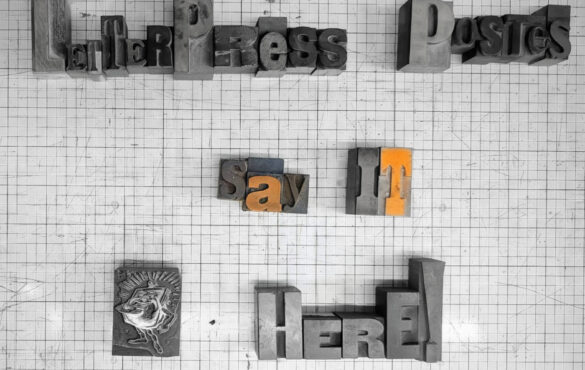
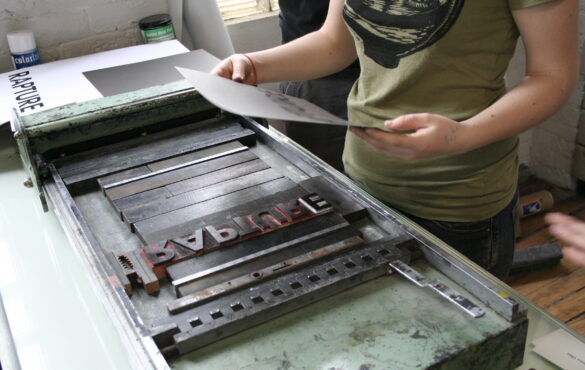
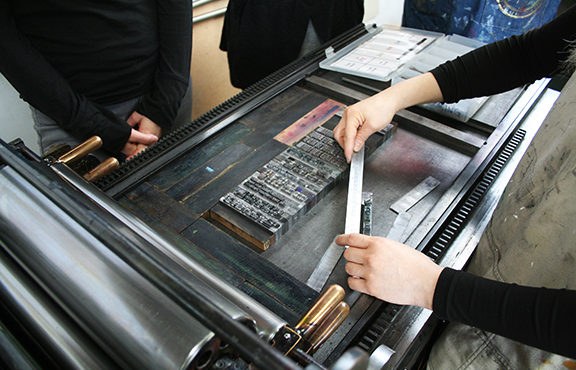
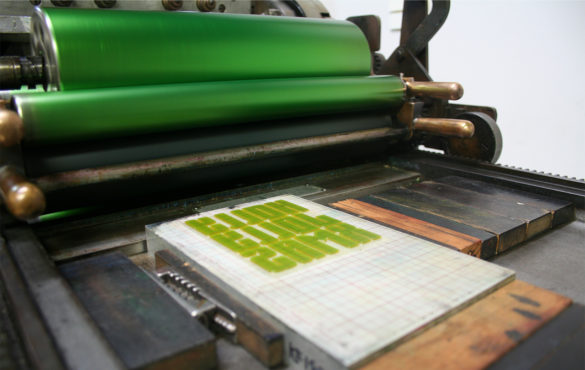
Designers work with type constantly, but often take for granted the rules and nuances of elegant typesetting and type design. This workshop, led by Amira Hegazy, is an invitation to slow down and develop a more considered relationship with letterforms: their history, their construction, and the decisions embedded in their design. Drawing on a survey of typographic history, the session moves into a close examination of letterform anatomy — the relationships between strokes, counters, spacing, and proportion that give each type its unique voice. The workshop culminates in a hands-on letterpress activity, where setting type by hand makes abstract principles concrete. There is no better argument for understanding type as a physical, spatial thing than having to reckon with it as one.

This is the second workshop in the Design for Print sessions with Amira Hegazy

This workshop series is built for designers and other digital image makers to translate their digital skills to physical making. We will take specific elements of the design process and decode them to print processes. We will highlight historical and theoretical elements that have woven through design practice from days of physical production to our digital workspaces. Expect to leave each workshop feeling more knowledgeable about your day-to-day design workflows and how to realize your designs through hands-on print practices at Spudnik Press. 

Note: Each workshop in this series is enrolled individually. You can register for a single workshop or sign up for the full series.

Amira Hegazy is a Chicago-based designer, printer, bookmaker and educator whose work lives at the intersection of print, publication, and community. This four-part workshop series is designed specifically for graphic designers looking to deepen their print knowledge — from file setup to finished object.

May 24 | Design for Print: Designing for the Printed Book

Designing a book digitally can feel linear, spreads seamlessly connect and sequencing is quick and direct. But, a physical book is an object with its own logic. Books make demands that a computer screen never does — it has a spine, a sequence, a physical weight, and a relationship between recto and verso that no amount of scrolling can replicate. For designers, working in the book format means grappling with a set of structural and spatial considerations that are distinct from any other medium: how content is organized across a signature, how imposition shapes what is possible on press, how the rhythm of a layout accumulates across pages rather than resolving on one. 

This workshop, led by Amira Hegazy, approaches the book as a design problem in the fullest sense — one where form and content are inseparable, and where every decision, from margins to binding method, is also an editorial one. This workshop briefly explores the historical development of book form and how physical possibilities of the book have developed with the needs of production and readers.  Whether you are working on a zine, a monograph, an artist book, or a longer publication, the workshop offers both practical grounding and a more expansive framework for thinking about what a book can do.

This is the third workshop in the Design for Print sessions with Amira Hegazy

This workshop series is built for designers and other digital image makers to translate their digital skills to physical making. We will take specific elements of the design process and decode them to print processes. We will highlight historical and theoretical elements that have woven through design practice from days of physical production to our digital workspaces. Expect to leave each workshop feeling more knowledgeable about your day-to-day design workflows and how to realize your designs through hands-on print practices at Spudnik Press. 

Amira Hegazy is a Chicago-based designer, printer, bookmaker and educator whose work lives at the intersection of print, publication, and community. This four-part workshop series is designed specifically for graphic designers looking to deepen their print knowledge — from file setup to finished object.

May 31 | Design for Print: Containers — Presenting Your Work Through Box Building

Presentation is not packaging — it’s a critical design decision, the one that determines how a body of work is first encountered and held. For printed matter especially, the container is an extension of the object itself: it sets expectation, establishes care, and frames everything inside it. 

This workshop, led by Amira Hegazy, focuses on the design and construction of custom enclosures to explore how structure, material, and proportion work together to create objects worthy of what it holds. Participants will build their own boxes by hand, developing both the technical vocabulary and the design sensibility to think about containment as an intentional act. We will discuss how engineering containers go hand in hand with print design preparation and consider how the design and fabrication process are inseparable. Essential for designers working with product development, book editions, print portfolios, or any work where the experience of receiving matters as much as the work itself.

This is the fourth workshop in the Design for Print sessions with Amira Hegazy

This workshop series is built for designers and other digital image makers to translate their digital skills to physical making. We will take specific elements of the design process and decode them to print processes. We will highlight historical and theoretical elements that have woven through design practice from days of physical production to our digital workspaces. Expect to leave each workshop feeling more knowledgeable about your day-to-day design workflows and how to realize your designs through hands-on print practices at Spudnik Press. 

Amira Hegazy is a Chicago-based designer, printer, bookmaker and educator whose work lives at the intersection of print, publication, and community. This four-part workshop series is designed specifically for graphic designers looking to deepen their print knowledge — from file setup to finished object.

June 7 | Scratch & Press: A Three-Part Youth Printmaking Series

For ages 11–14 · 3 sessions · All skill levels welcome
Sundays 9am-12pm (June 7, 14, and 21)

Get your hands inky and your prints analog. Over three sessions, you’ll explore three completely different printmaking traditions — each with its own tools, materials, and magic. From screen printing your own wearables on day one, to scratching metal plates and pulling intaglio prints, to running paper through a letterpress — this series is designed for curious, bold makers who want to learn how images are made.


Session 1
June 7 9am-12pm
Screen printing — wear your work
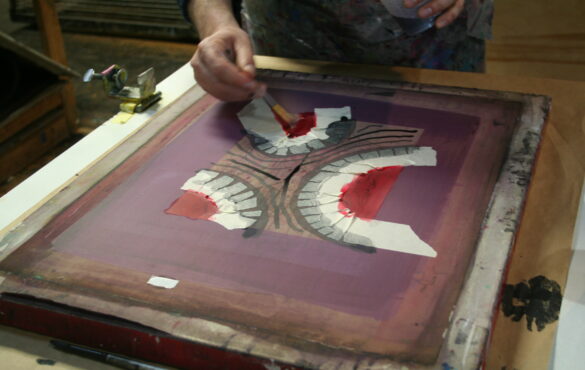
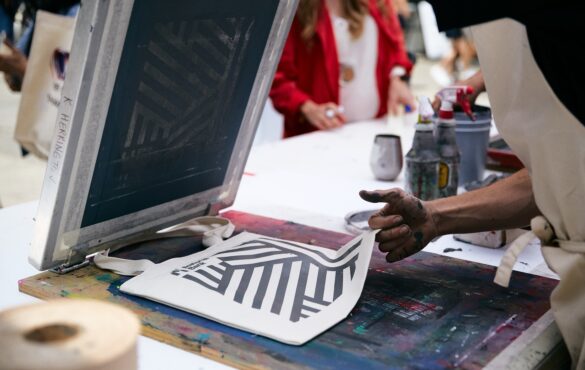
Start by screen printing an apron you’ll use for the rest of the series — then keep the press warm with t-shirts, tote bags, and whatever else you bring to print on. You’ll learn to expose a photographic screen, mix custom ink colors, and pull clean prints through the mesh. Walk away with wearable art.


Session 2
June 14 9am-12pm
Drypoint etching — scratch, score, and print

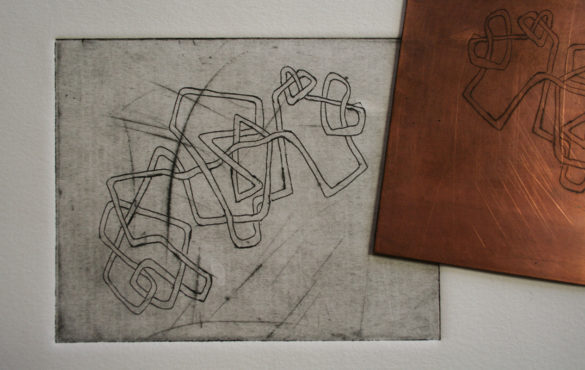
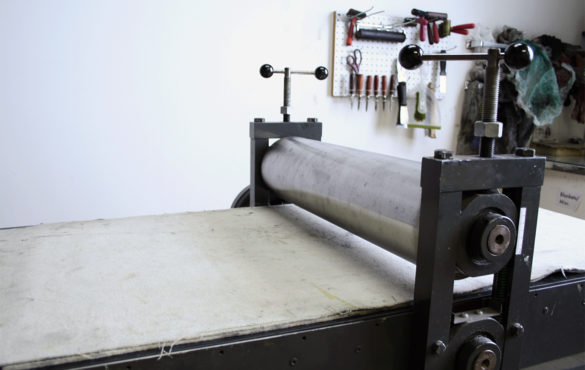
Learn the fundamentals of intaglio printmaking by drawing directly onto a metal plate with a steel needle. Drypoint is immediate and expressive — the burr your tool raises holds ink in ways that produce rich, velvety lines unlike anything you can get from a brush or pen. You’ll learn plate wiping and printing technique, and leave with a finished plate and a set of prints.


Session 3
June 21 9am-12pm
Letterpress — texture, pressure, and the printed page

Finish the series on a machine that shaped the modern world. Using stencils and low-relief collages — cut paper, string, netting, plant material — you’ll create richly textured prints by running them through a letterpress cylinder. The varying thickness of your materials determines how much ink transfers to the page, producing nuanced, one-of-a-kind impressions up to 19″ × 25″. Experiment with hand inking and multi-layer compositions to tell a story, build an illustration, or just see what the press can do.